
Fern Seeds in Anglo-Celtic Folklore
“We have the receipt of fern seed: we walk invisible.” (Shakespeare, Henry IV Part I, Act 2, scene 1)

In various Anglo-Celtic magical and folkloric traditions, one plant was so widely known for its mystical properties that it made casual appearances works like Shakespeare’s Henry IV: that of the mystical and fabled Fern Seed.
Ferns themselves are attributed with a vast array of magical and medicinal capabilities throughout different cultures, such as healing, protection, fertility, and weather magic, but they are, in particular, associated with the Fae and the Realm of Faerie. However, within the context of Brythonic and Gaelic folklore (along with various other cultures across Europe,) there are magical practices specifically associated with Fern Seeds. As put by Thomas Jackson in A Treatise Concerning the Original of Unbelief, 1625:
“It was my happe since I undertook the Ministrie to question an ignorant soule… what he saw or heard when he watch’t the falling of the Ferne-seed at an unseasonable and suspitious houre. Why (quoth he) … doe you think that the devil hath ought to do with that good seed? No: it is in the keeping of the King of Fayries and he, I know, will do me no harm: yet he had utterly forgotten this King’s name until I remembered it unto him out of my reading of Huon of Bordeaux.” (i.e. Alberich/Oberon)

The magical qualities of Fern Seed are recalled even into the modern era, with mainstream representations of the practice recounted as recently as Madison Julius Cawein’s 19th century poem, The Spell:
“St John hath told me what to do
To search and find the ferns that grow
The fern seed that the faeries know;
Then sprinkle fern seed in my shoe,
And haunt the steps of you, my dear,
And haunt the steps of you.”
In other traditions, the seed was said to be capable of disclosing the location of lost things and secreted treasure. This particular belief gave rise to a custom known as “Watching the Fern,” which involved observing ferns (particularly those known as moonworts) on Midsummer Eve in hopes that, if lucky, one would witness the blooming of a rare blue flower that shed seeds which, if properly collected, conferred the collector with the ability to discover lost items and hidden treasures. It was also thought that drinking the sap of these “Blossomed” ferns on Midsummer Eve granted extended longevity or perpetual youth. Elsewhere, they have been used to bring luck, converse with animals, and protect against harmful magic, however, Fern Seeds are probably best known for their purported ability to impart invisibility upon those who obtain them. During the Middle Ages especially, it was widely believed that if one could successfully collect Fern Seeds in the proper manner, they would gain the gift of moving unseen through the world.
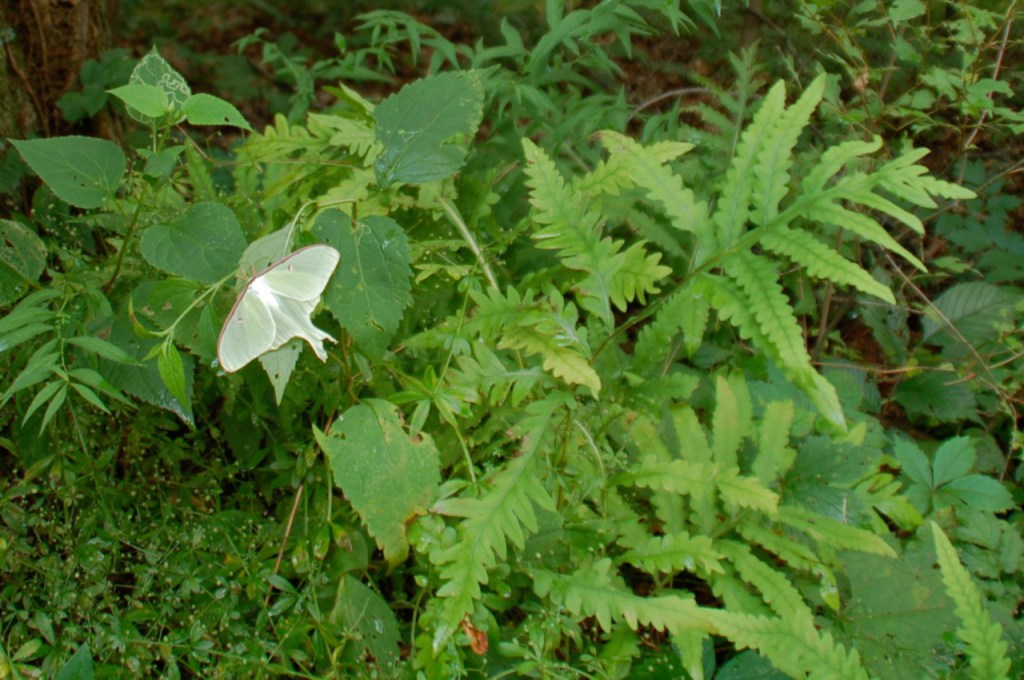
The most prominent tradition surrounding the collection and employment of Fern Seeds states that they are shed from their fronds on Midsummer’s Eve at midnight (also venerated as the Eve of the Feast of St. John the Baptist.) It was thought that one could harvest the cryptic fern seeds by stacking twelve pewter plates beneath a fern frond. At midnight, a brilliant blue blossom opened, producing a single golden seed. The seed would then pass through eleven of the pewter plates and come to rest on the twelfth. Aside from this, various other requirements for successful harvesting of the Fern Seed have been observed, such as the need for the seeker to go collecting bare-footed, and in a spiritual state of mind. However, even adhering to any and all of these conditions, the seeker still often found their Fern Seeds stolen by wandering Faeries, who also relied on the magics of the Midsummer Seed. Other myths stated that the flower was bright crimson, and would light up the darkness when it unfurled its petals at midnight. At this point, if the seed wasn’t harvested immediately, the Devil was said to claim the flower for himself.

As attested to by Richard Bovet in his 1684 treatise on demonology, Pandaemonium:
“Much discourse about the gathering of Fern-seed (which is looked upon as a Magical herb) on the night of Midsummer’s Eve, and I remember I was told of one that went to gather it, and the Spirits whistlit by his ears like bullets and sometimes struck his Hat or other parts of his Body. In fine: though that he had gotten a quantity of it, and secured it in papers and a Box besides, when he came home he found it all empty. But probably this appointing of times and hours is the Devil’s institution.”
In many regions, great precautions were taken to protect would-be-collectors with magical measures as well. An account by English author, Samuel Bamford, describes incantations and rites meant to accompany any attempts made to gather Fern Seed—lest the seeker fall prey to the grim consequences of blundering in their supplications and/or being deemed as unworthy by the Resident Wights. The fern was said to be located in a Faery Clough (Narrow Valley,) and collectors reportedly traveled there armed with multiple items, including a pewter platter, an earthenware dish, and a skull lined with clay and moss, adorned with a tress of a loved one’s hair. Numerous orisons were recited whilst the seed was gently scraped onto the plates through use of a Hazel Rod.
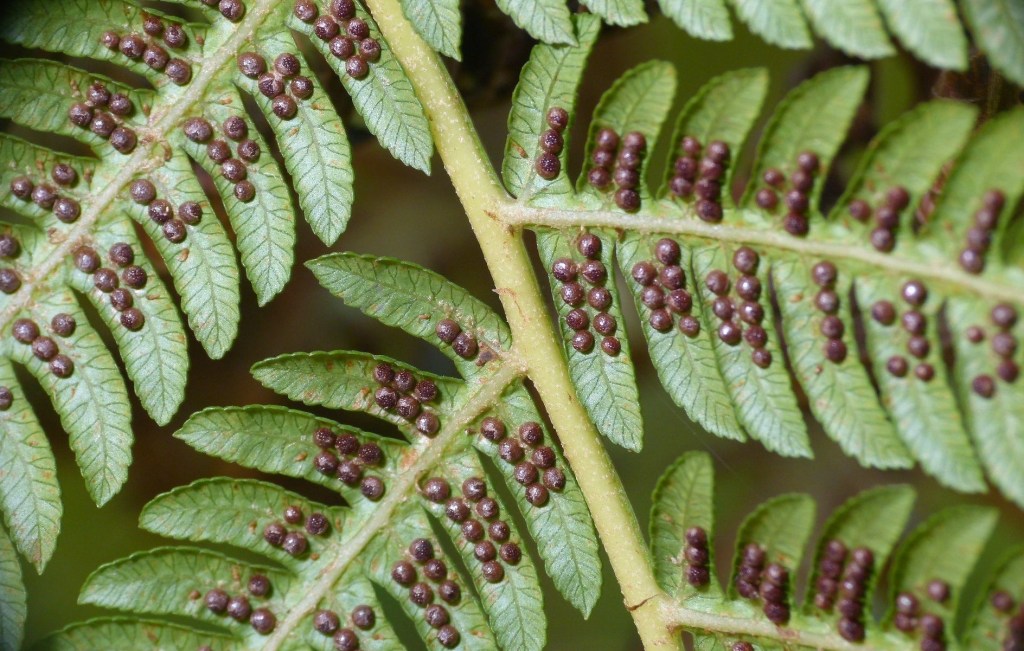
Now, it is worth noting that, while societies of antiquity believed that all plants must reproduce by seeds, Fern’s are actually one of a few extant plant species that reproduces through the process of sporulation. This misunderstanding led many people to believe that fern seeds were merely invisible, since the plants still managed to reproduce despite having no visible means of reproduction that lined up with the contemporary botany of the time. However, given that many varieties of fern do produce spores visible to the naked eye, despite their diminutive nature, many people did claim to have seen the elusive “seeds” at one time or another. All of this lent itself then to the belief that, if a person obtained one of these invisible seeds, they too could become invisible. That said, the practice lives on to this day, with those who partake in the tradition of “Watching the Fern,” observing to see if any of these spore should form at midnight on Midsummer Eve—bringing with them the magic of the Fair Folk.

In my own personal experience, I have found that Fern Spores—particularly those gathered beneath a Full Moon with Hazel Rod and Pewter Dish—serve as a potent form of materia magica when used to bolster and empower magical operations of both Luck and Illusion. Likewise, they can be quite effective when utilized in workings that aims to draw, appease, or propitiate Gloaming Wights.
Resources
• ‘Plant Lore, Legends, and Lyrics. Embracing the Myths, Superstitions, Traditions, and Folk-Lore of the Plant Kingdom‘—by Thomas Folkard, 1884
• ‘The economic uses and associated folklore of ferns and fern allies’ —by Lenore Wile May
• ‘A Treatise Concerning the Original of Unbelief’— by Thomas Jackson, 1625
• ‘Pandaemonium’ — by Richard Bovet, 1684
 The Wending Wayfarer